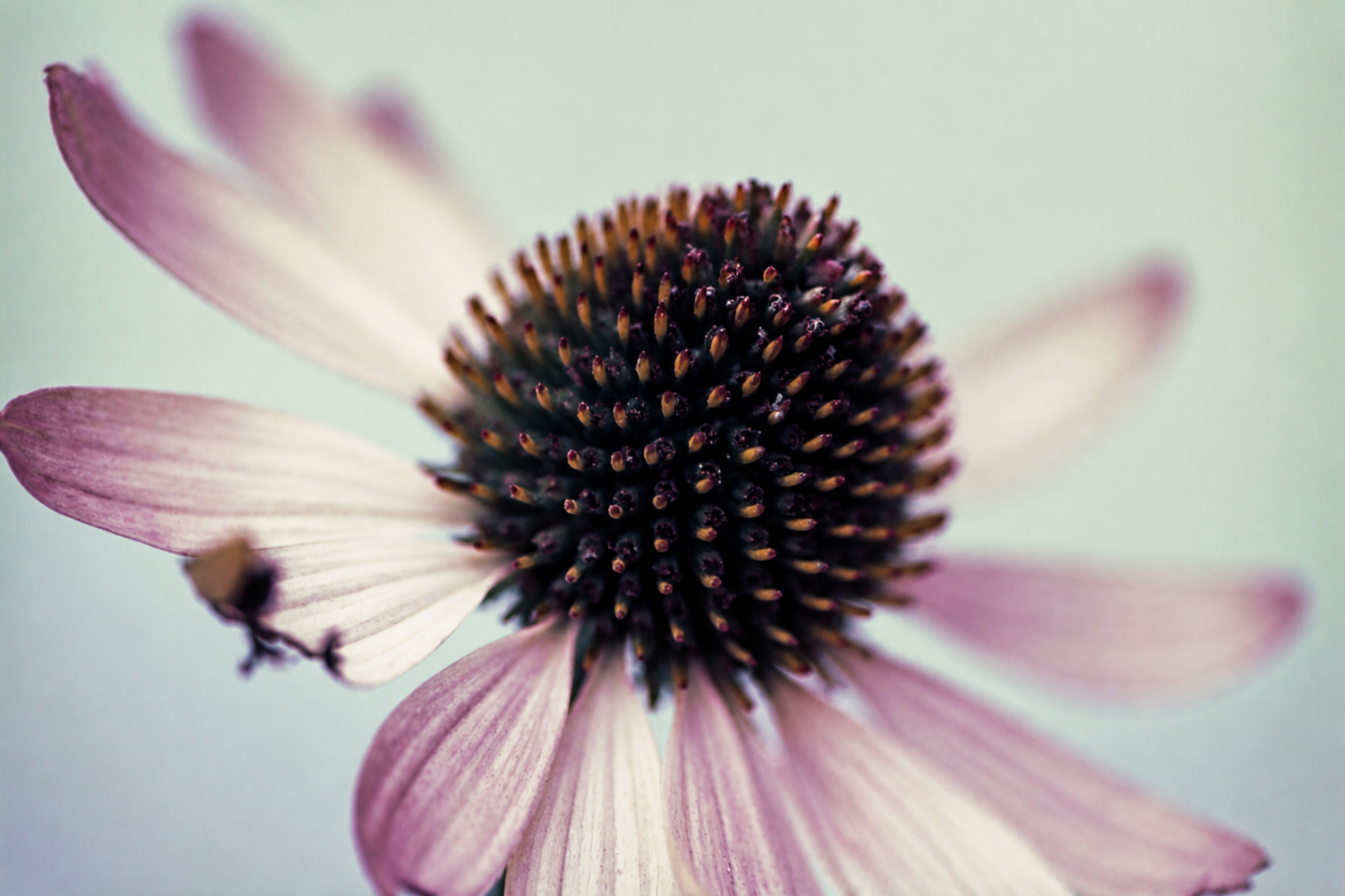
There is nothing quite like pulling freshly processed E-6 film off the reels. Holding chrome transparencies up to the light offers an immediate, uncompromising look at your exposure precision, local contrast, and delicate color palette.
Recently, I set up in the garden to photograph some autumn wildflowers—which were still surprisingly vibrant and rich in color despite the late season. To test the nuances of color rendering, shadow depth, and highlight retention under ultra-close magnification, I loaded up four rolls of 35mm slide film across three classic stocks: Kodak Professional E100 (2 rolls), Fujifilm Provia 100F (1 roll), and Fujifilm Velvia 100 (1 roll).
Here is a full breakdown of the shoot, the technical gear setup, macro pitfall management, E-6 processing, emulsion color cast comparisons, and scanning workflow.

The Gear Setup: Precision Meets Close-Up Lighting
Macro photography on slide film leaves zero margin for error. With a narrow dynamic range (roughly 5 to 6 stops) and paper-thin depth of field at close working distances, minor miscalculations in focus or lighting are magnified exponentially.
1. Camera & Lens: Nikon F6 + AF-S VR Micro-Nikkor 105mm f/2.8G IF-ED
The Nikon F6 remains the absolute pinnacle of 35mm SLR design. Its 100% frame coverage viewfinder is critical when precise edge-to-edge composition and focus placement matter most. Paired with the modern AF-S VR Micro-NIKKOR 105mm f/2.8G IF-ED, the optical clarity, rendering, and contrast are phenomenal.
2. Compositional Philosophy: Wide Apertures over Digital Stacking
In modern digital photography, focus stacking has become the default method for obtaining end-to-end sharpness in macro work. Shooting single frames on 35mm film requires an entirely different mindset. I deliberately stayed away from focus stacking, choosing instead to lean into a classic optical aesthetic by shooting mostly with wider apertures—f/4 or wider on most frames, with a few stopped down to f/5.6 or f/8.
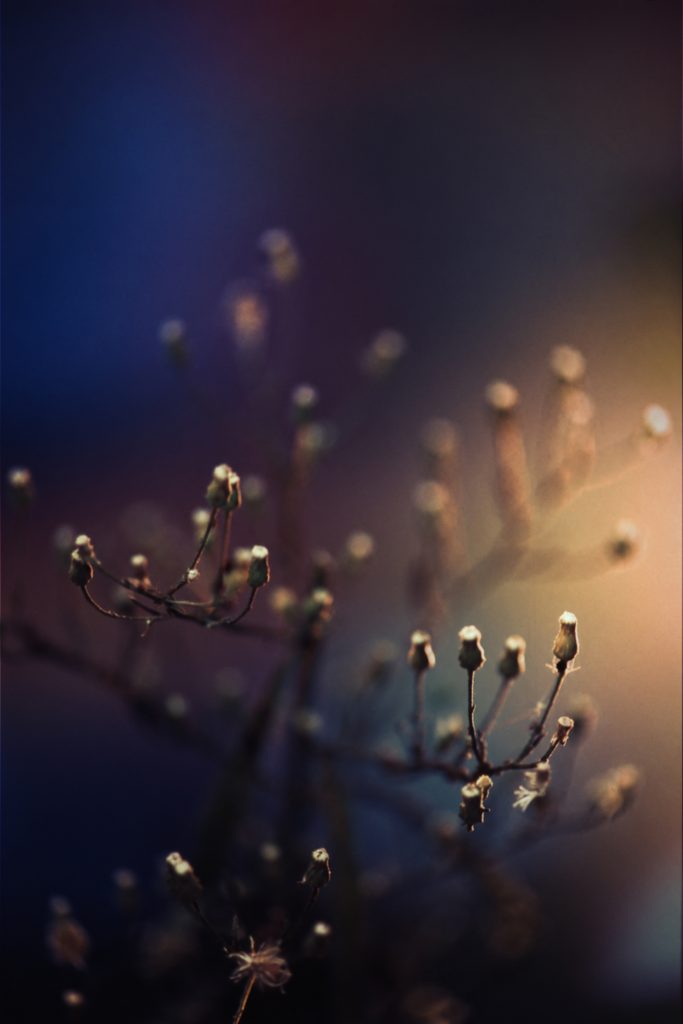
Shooting wide open allows the lens to isolate micro-details on the stamen or petal edge while painting the background into an ultra-smooth, painterly wash of color.
3. Lighting: Mastering the Nikon R1C1 Wireless Close-Up Speedlight Kit
Even when shooting at f/4 or wider, artificial fill light is essential to control harsh micro-shadows, freeze plant movement, and add specular highlights. Mounted on the SX-1 lens ring or positioned off-camera using the included AS-20 stands, the Nikon R1C1 Wireless Kit offers incredible creative freedom:
Crafting Directional Lighting (Side, Back, and Kickers)
- Asymmetrical Ratios & Side-Lighting: Rather than using flat, 1:1 front lighting on the lens ring, dialing in asymmetrical output ratios (e.g., 1:2 or 1:4) creates dimensional side-lighting. Side light rakes across delicate petals and stems, accentuating physical textures that flat front flash wipes out.
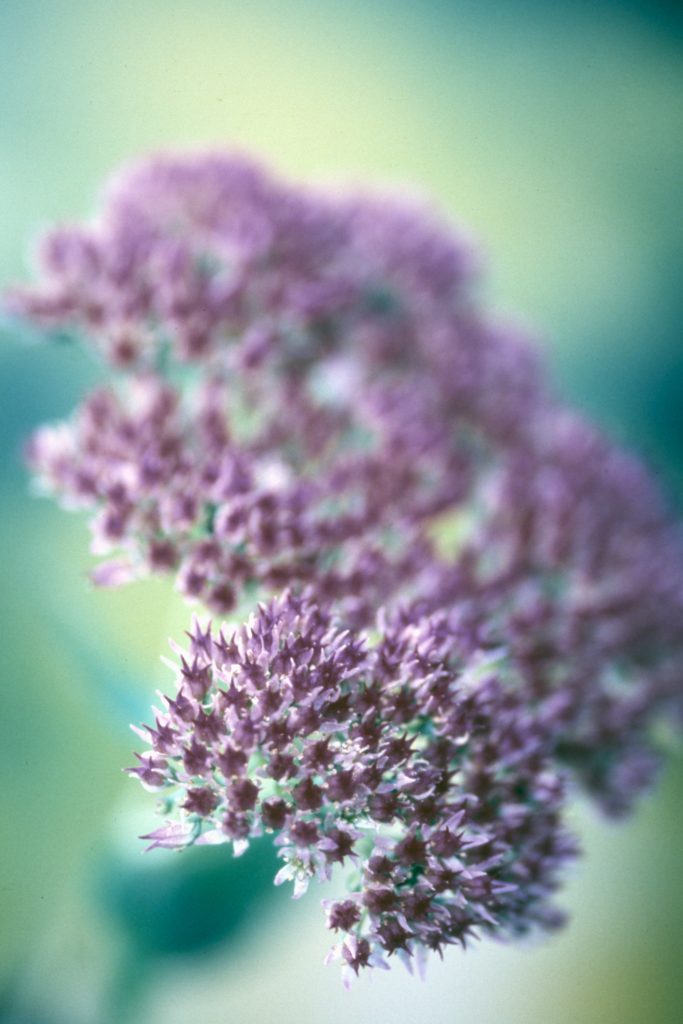
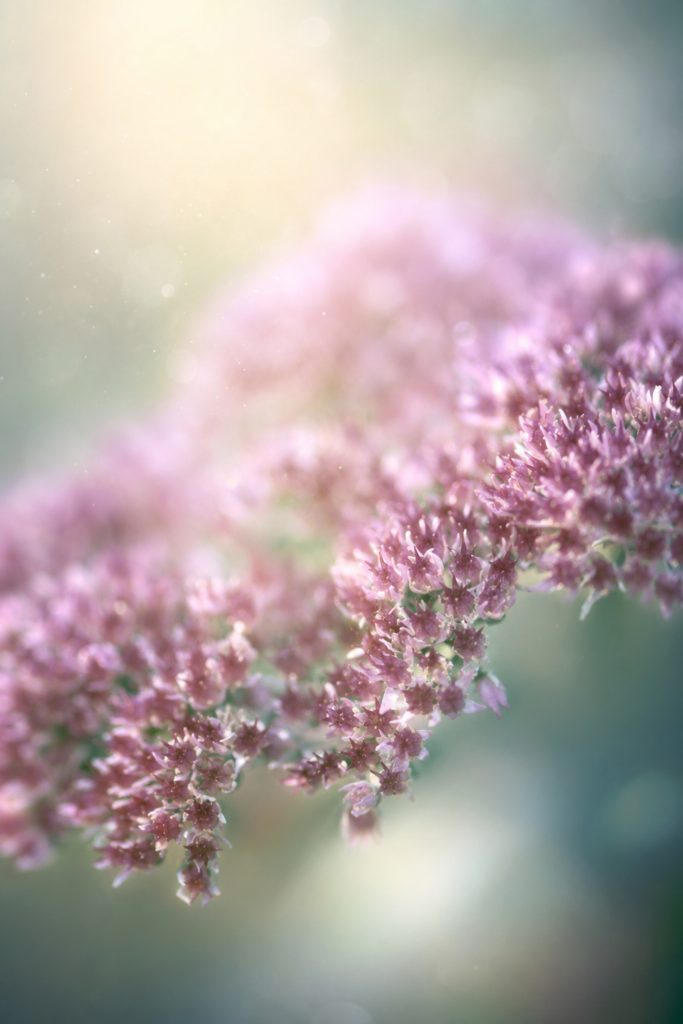
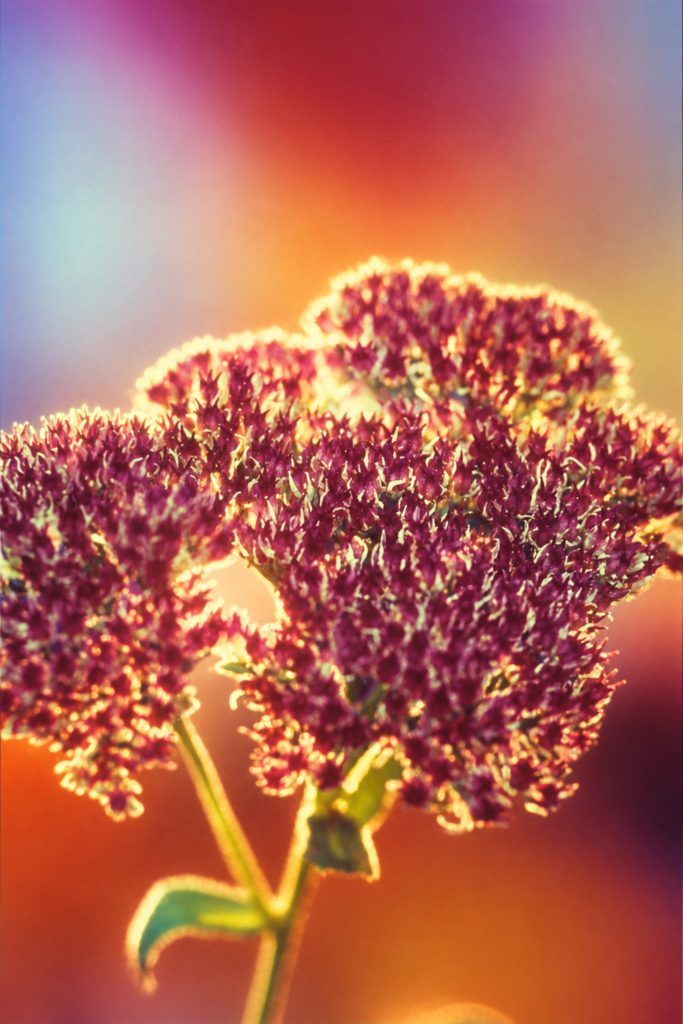
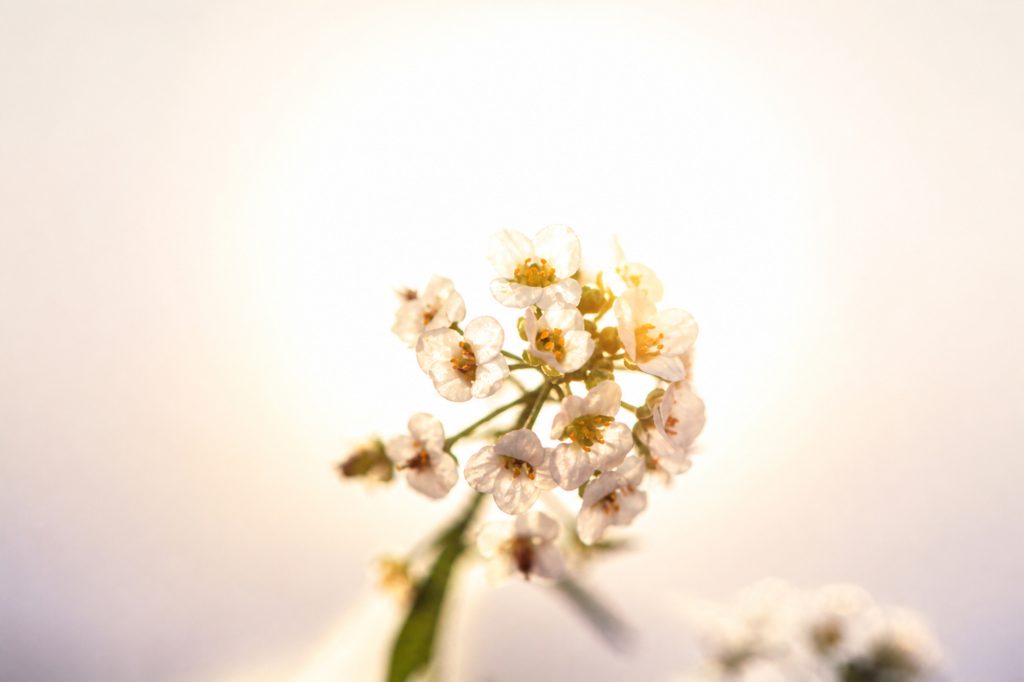
- Backlighting & Rim Lighting: Detaching one or both SB-R200 units and placing them behind the flower transforms translucent petals. Backlighting makes thin, colorful petals glow from within on slide film, creating distinct separation between the subject and the background.
- Kicker Lights: Positioning a Speedlight low and off to the rear corner acts as a dedicated kicker light. This introduces subtle rim highlights along stem edges, dew drops, or fuzzy botanical hairs, outlining the flower against dark background foliage.
Creative Color Control with Gels
The R1C1 system includes color filter sets that allow for precise color temperature adjustments:
- Warming Gels (CTO): Slipping a light amber warming gel over an off-camera kicker light simulates a low, golden late-afternoon sunbeam striking the bloom. This prevents the flash from looking sterile and complements the warm tones of autumn flowers.
- Cooling & Background Gels: Applying a cool blue or green gel to a Speedlight aimed away from the subject at the distant background foliage turns drab background shadows into rich, stylized bokeh bubbles.
Shooting macro on slide film brings specific optical and mechanical challenges that don’t exist in general landscape work. Here are the main traps to watch for:
Macro Traps: Common Pitfalls & How to Avoid Them
1. The Wind Motion Trap
- The Problem: At high magnifications, even a faint autumn breeze causes flower heads to sway out of the focal plane or create severe motion blur at shutter speeds slower than 1/125s.
- The Fix: Use a plant clamp (“Plamp”) attached to a secondary stake to gently hold the flower stem steady below the frame line. Combine this with the R1C1 Speedlights—the short flash duration (1/1000s or faster) freezes plant movement completely.
2. Navigating the Razor-Thin Plane of Focus at f/2.8–f/4
- The Problem: Shooting wide open at f/2.8 or f/4 gives a depth of field measured in fractions of a millimeter. Misjudging focus by a millimeter puts the critical feature out of focus.
- The Fix: Align the camera’s film plane strictly parallel to the geometric face of the flower subject. Use the F6’s depth-of-field preview button to verify exactly which petal or stamen falls into the focal plane before tripping the shutter.
3. Effective Aperture Loss (Bellows Factor)
- The Problem: As a macro lens extends toward 1:1 focus, the light cone spreads over a larger area, causing light loss (up to 2 full stops at maximum extension).
- The Fix: While the Nikon F6’s TTL metering automatically compensates for lens extension, keep in mind that an indicated f/4 may act like an effective f/5.6 or f/8 in terms of light transmission and diffraction characteristics at close range.
Exposure Strategy & Bracketing
Slide film is unforgiving: clipped highlights turn chalky-white, while underexposure buries shadow detail into dense blackness.
To ensure exact exposure on every flower, I systematically bracketed every single shot:
- -1/3 EV (Slight saturation boost, shadow preservation)
- Normal / Box Speed (EI 100)
- +1/3 EV (Highlight detail test, softer contrast)
Home E-6 Processing: Jobo CPP2 + Unicolor Kit
Back in the darkroom, all four rolls were processed together in a single batch to ensure absolute consistency across temperature and agitation cycles.
- Processor: Jobo CPP2 Rotary Processor with lift.
- Chemistry: Unicolor E-6 3-Bath Kit.
- Temperature: First Developer kept strictly at 105°F (40.5°C) with continuous rotary agitation.
Rotary processing guarantees even development across the entire length of the film strip, eliminating edge marks or density gradients—critical for consistent macro background tones.
Emulsion Shootout & Color Cast Tendencies
Holding the fresh transparencies on the light table made the personality of each film stock immediately clear, especially given the rich autumn floral colors in the garden.
1. Kodak Professional E100 (2 Rolls)
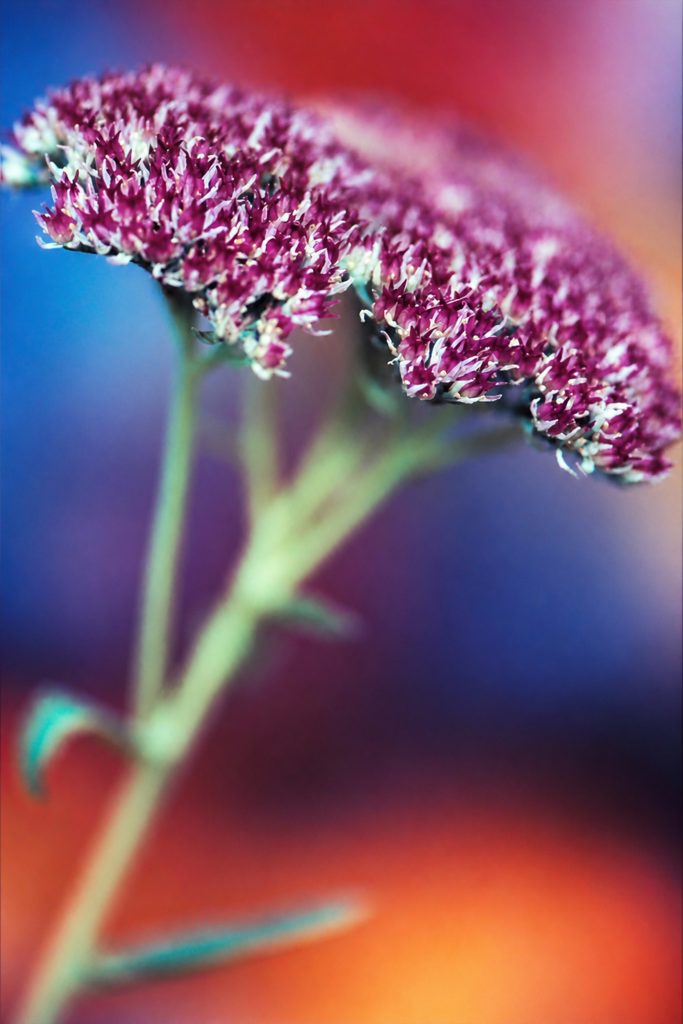
- Color Cast Tendency: Neutral-Warm with a very subtle yellow/green balance under specific natural light conditions.
- Tonal Behavior: Modern E100 is engineered to be extremely color-neutral. Under electronic flash (R1C1 Speedlights), it delivers true-to-life whites and clean grays. Yellow stamens and warm-toned petals retained exquisite detail without turning muddy.
- Macro Performance: Smooth tonal transitions make E100 easy to scan without blowing out bright specular highlights on wet petals.
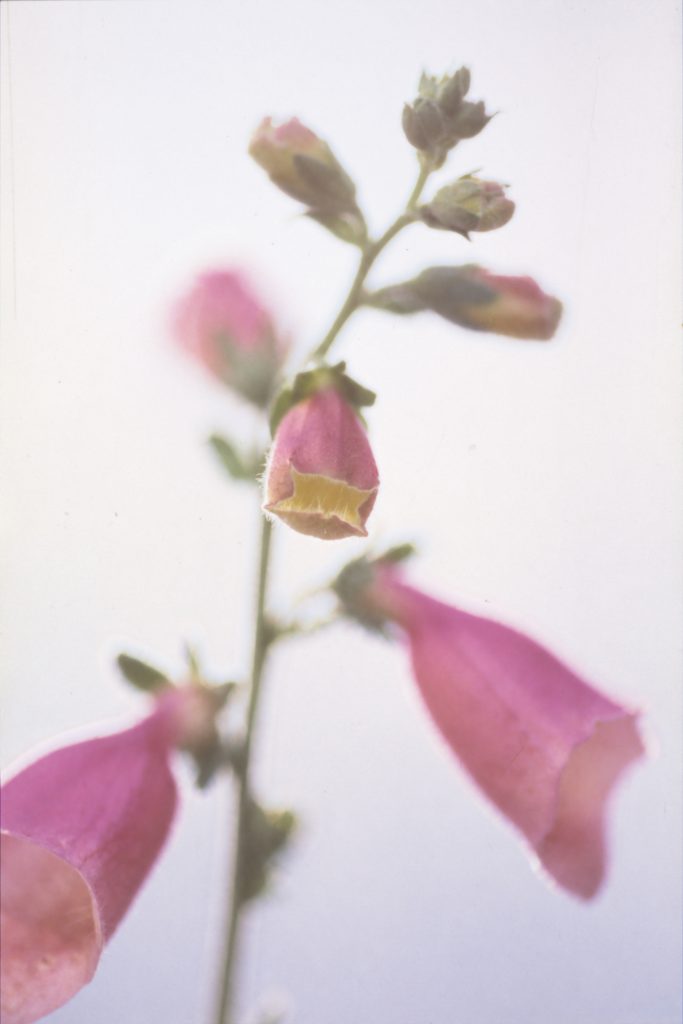
2. Fujifilm Provia 100F (1 Roll)
- Color Cast Tendency: Cool-Blue to Cyan in shadow areas, leaning slightly magenta in long exposures.
- Tonal Behavior: Provia is a neutral benchmark, but carries Fujifilm’s crisp signature. In shaded ambient light or deep shadow zones behind flower petals, shadows reliably shift toward a cool cyan/blue.
- Macro Performance: This cool shadow cast causes dark green leaf backgrounds to drop into deep, elegant blue-greens, making vibrant flower petals jump off the slide with great separation.
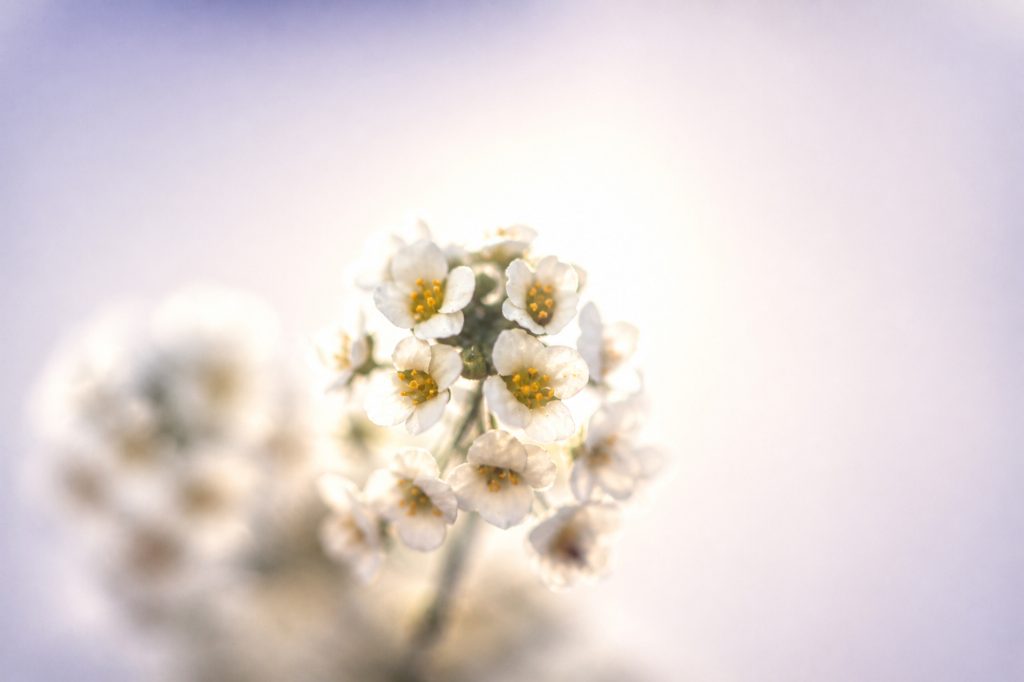
3. Fujifilm Velvia 100 (1 Roll)
- Color Cast Tendency: Strong Magenta / Red / Warm Violet bias across midtones and shadows.
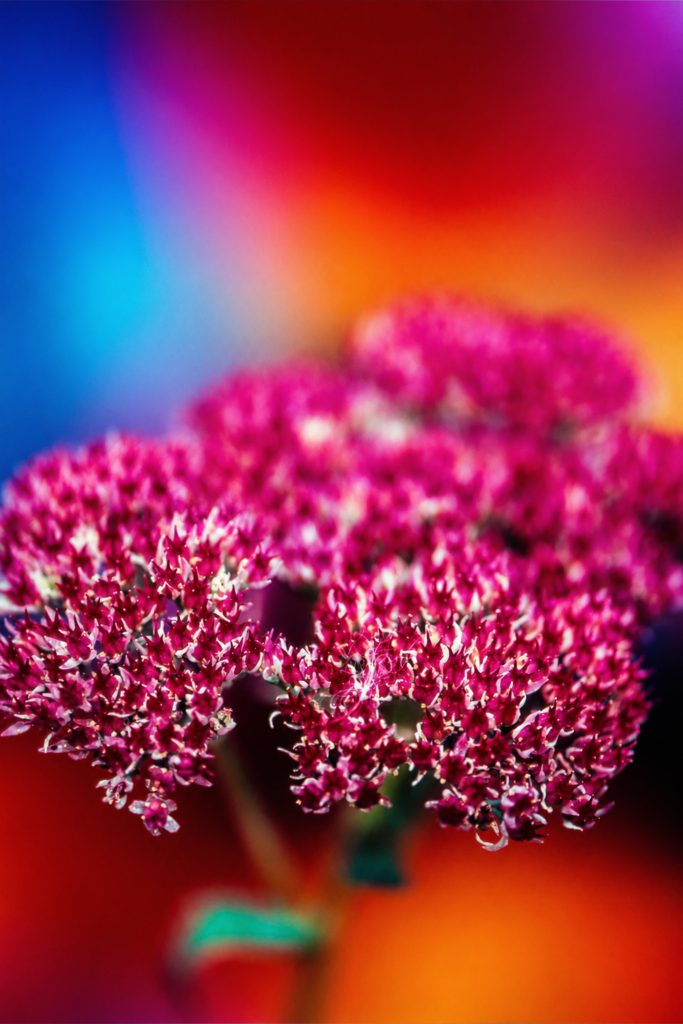
- Tonal Behavior: Velvia 100 exaggerates warm tones, earth shades, and purples. Shadows do not drop to neutral black; they lock up with a dark violet or reddish-magenta tint.
- Macro Performance: Red, pink, orange, and purple wildflowers look hyper-saturated and almost three-dimensional. Latitude is razor-thin: the -1/3 EV bracketed frame was almost always the winner, as the added density richened the colors even further.
Emulsion Comparison Chart
| Film Stock | Color Cast Tendency | Saturation & Contrast | Shadow Response | Ideal Macro Subject |
|---|---|---|---|---|
| Kodak E100 | Warm-Neutral | Medium / Natural | Clean neutral-gray | Yellow, white, or pastel wildflowers |
| Fuji Provia 100F | Cool-Blue / Cyan | Moderate / Balanced | Cool blue shift | Fine floral detail, stems, foliage |
| Fuji Velvia 100 | Strong Magenta / Red | Extremely High / Punchy | Dark violet / dense black | Red, pink, and orange blooms |
Digitizing: Scanning on the Epson 10000XL + SilverFast AI Studio
Scanning dense slide film requires extracting high dynamic range without introducing digital noise into dark background foliage.
- Scanner: Epson Expression 10000XL (Large-Format Flatbed Graphic Scanner with Transparency Unit).
- Software: SilverFast AI Studio.
Scanning Workflow Tips for Slide Film:
- Multi-Exposure (ME): Critical for dense Velvia 100 slides. SilverFast performs two sequential scans at different exposure times, pulling out subtle shadow detail from dense background foliage without blowing out brightly lit petals.
- IT8 Color Calibration: Pre-calibrating the scanner using IT8 color targets for each specific film family (Kodak vs. Fuji) ensured that the digital color output on screen matched the physical slides on the light table.
- Height Calibration: Mounting film emulsion-side up with flat negatives loaded in to the carriers, on the 10000XL ensured crisp optical focus across the entire 35mm frame. This is a time consuming and finicky process but the extra work up front is worth it!
Final Thoughts
While digital macro photography leans heavily on focus stacking and infinite depth of field, shooting single-frame E-6 slide film wide open forces an intentionality and optical artistic choice that feels uniquely organic. The combination of the Nikon F6, the AF-S VR Micro-Nikkor 105mm, wireless macro speedlights with gel control, precise E-6 rotary processing, and high-end flatbed scanning yields transparencies that truly glow on the light table.
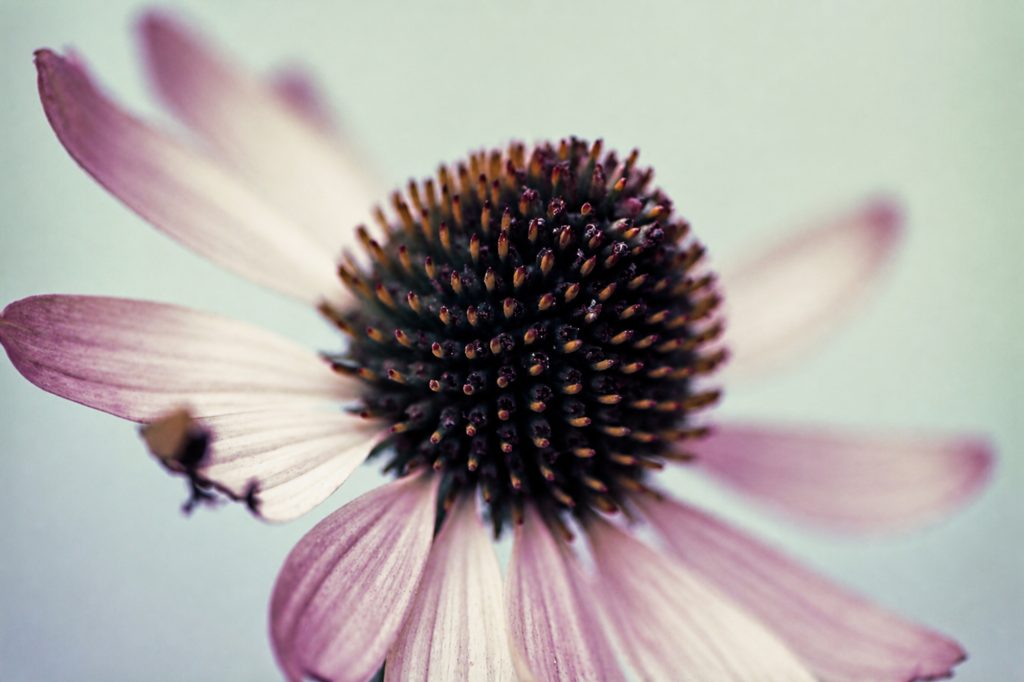
If you’re planning your own E-6 close-up session, embrace wide apertures like f/4 or f/5.6, align your focal plane with care, experiment with directional macro lighting and gels, and always bracket your shots—that 1/3-stop difference is where the slide film magic lives!